Google is testing a new AI Overview Map Pack format that merges organic links to external websites directly into Google Business Profiles. Clicking the links opens a card at the bottom of the mobile screen that shows different linked entities: effectively layering third-party content onto local business results.
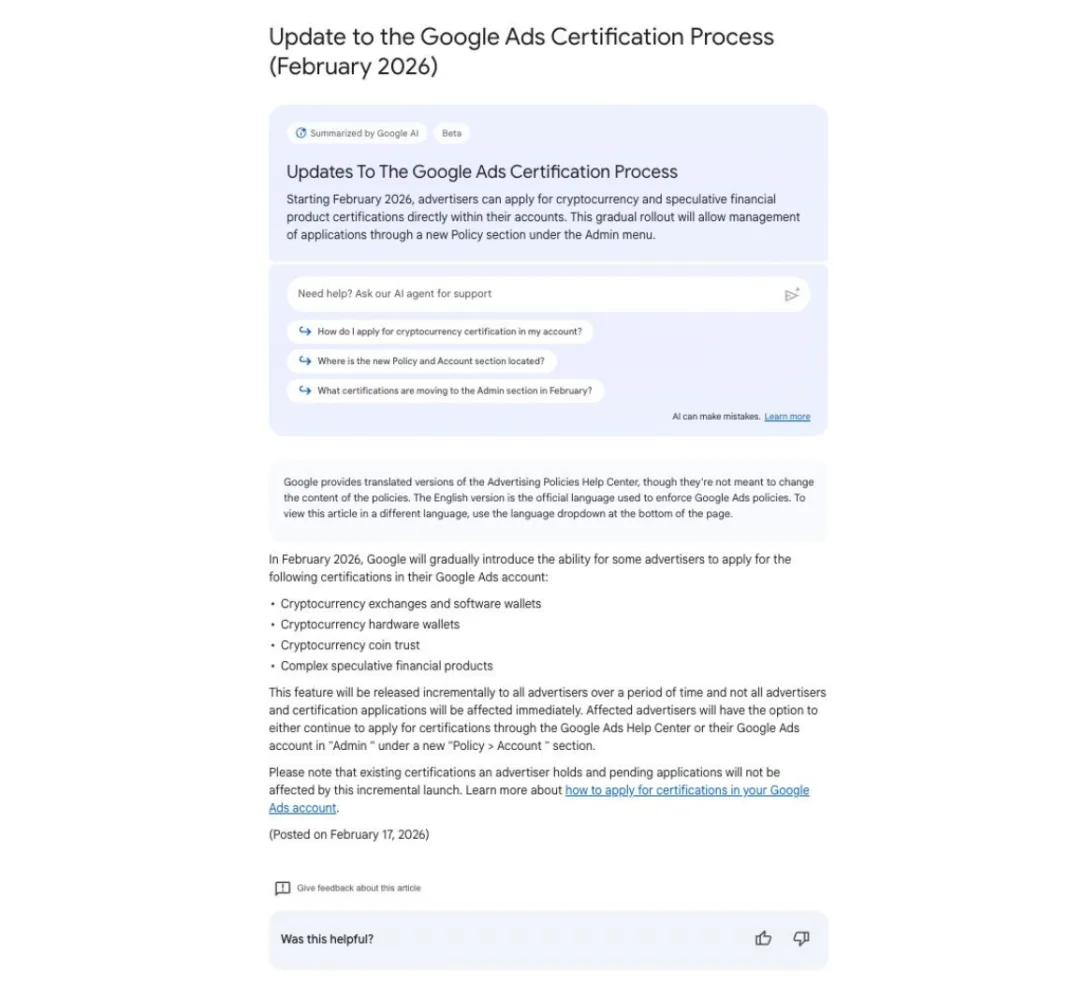
Google is streamlining access to crypto and complex speculative financial product advertising by allowing some advertisers to apply for certification directly within their Google Ads accounts. Previously, certification required a separate application process outside the platform - an administrative hurdle that added friction for legitimate advertisers in the space.
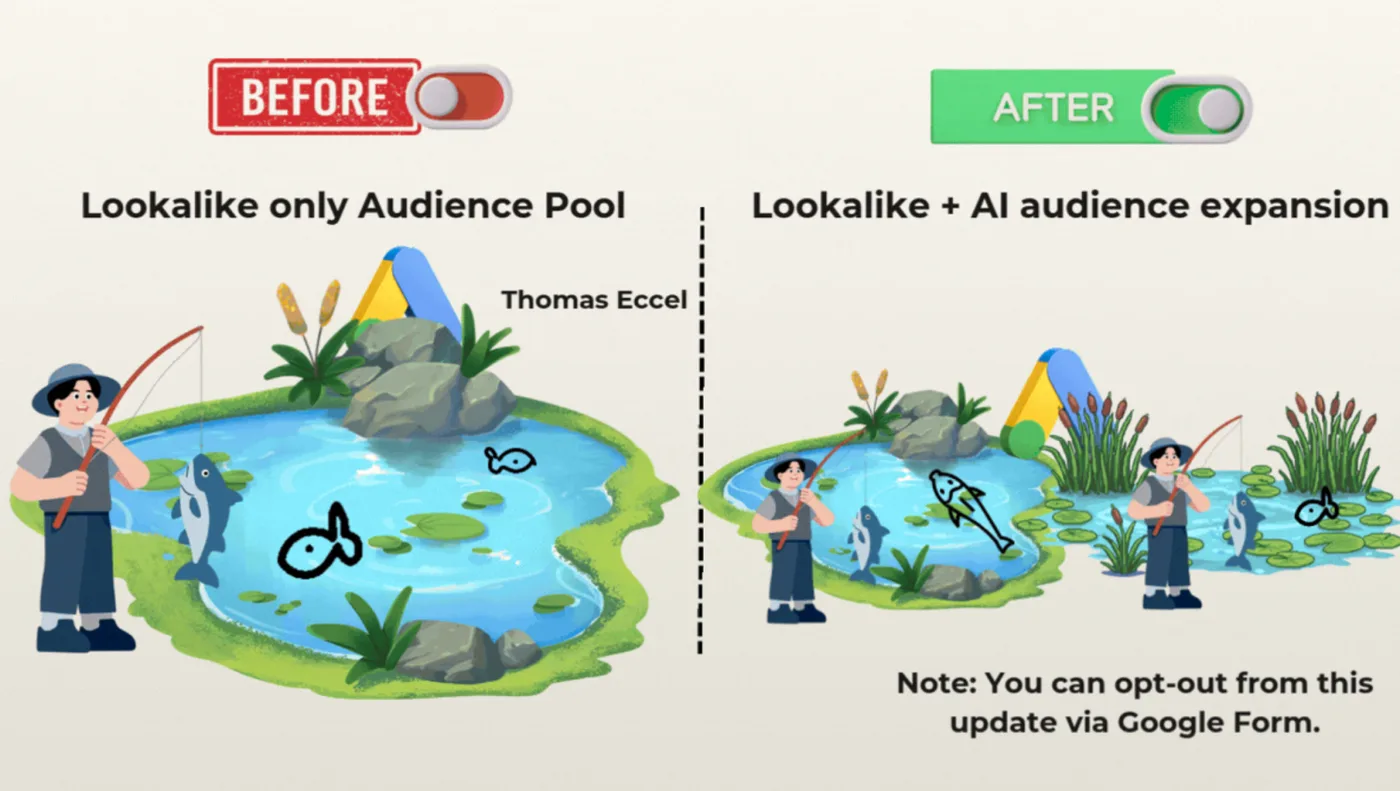
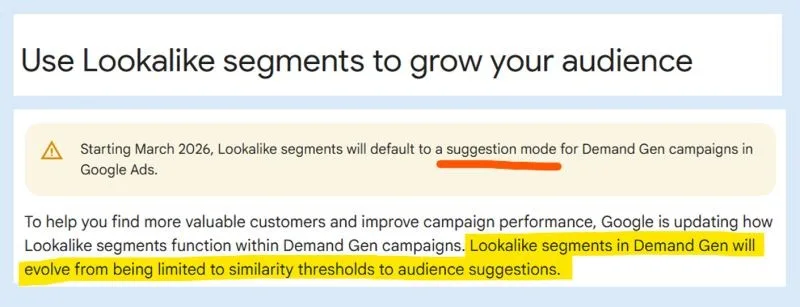
Google is fundamentally changing how Lookalike segments work in its advertising platform, moving from strict audience targeting to a more flexible, signal-based approach. The change, first spotted by Dario Zannoni last week, means that Lookalike audiences will increasingly serve as optimisation signals rather than hard-targeting constraints, following the pattern Google has established with other audience types.
Google Shopping has begun displaying brand logos next to merchant names: a small visual change with potentially significant implications for brand advertisers. The logo serves as an immediate trust signal, distinguishing established brands from generic resellers in a results page where products often appear nearly identical aside from price.
Google Ads has introduced a new YouTube reporting metric that addresses one of the channel's longest-standing measurement challenges: the gap between ad exposure and subsequent brand search behaviour. The metric, called Attributed Branded Searches, measures how many people saw a YouTube ad, did not click, and then later searched for the brand on Google.
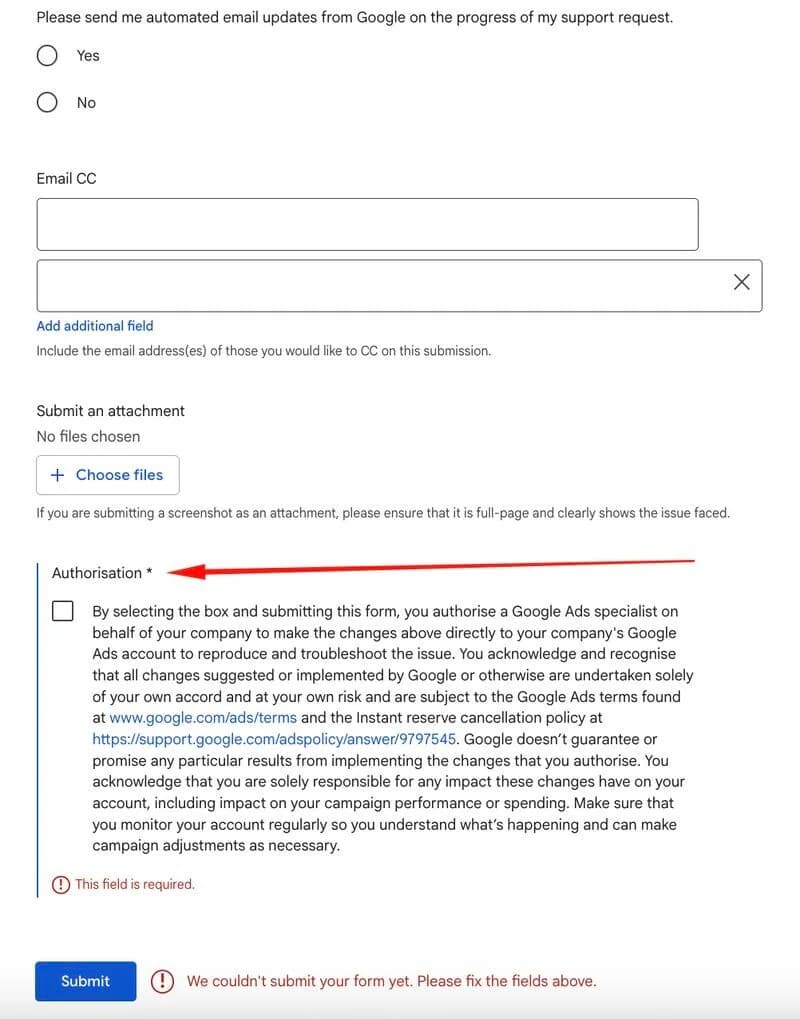
Google Ads has updated its support request process to require an "Authorisation" checkbox before submission. The checkbox grants Google Ads specialists access to your account and the ability to make changes for troubleshooting purposes.
Navah Hopkins made the case this week for why paid media professionals should pay attention to the AI Performance report in Bing Webmaster Tools. The report shows how often pages are cited by AI assistants and reveals the queries those assistants run in the background when responding to human questions.
The Google Ads API team has scheduled a release highlights event for v23.1 on February 26 at 11:00 AM EST, available on Discord and YouTube. The release is a minor update with additional features that don't require major migration.
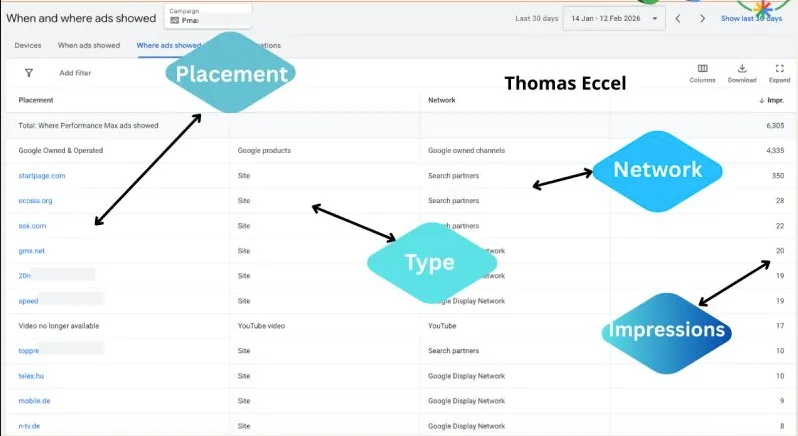
After years of opacity around where Performance Max ads actually appear, the "Where Ads Showed" report is beginning to populate with data in some accounts. Thomas Eccel reports seeing placement information for the first time, including the surprising appearance of Ecosia as a Google Search Partner.
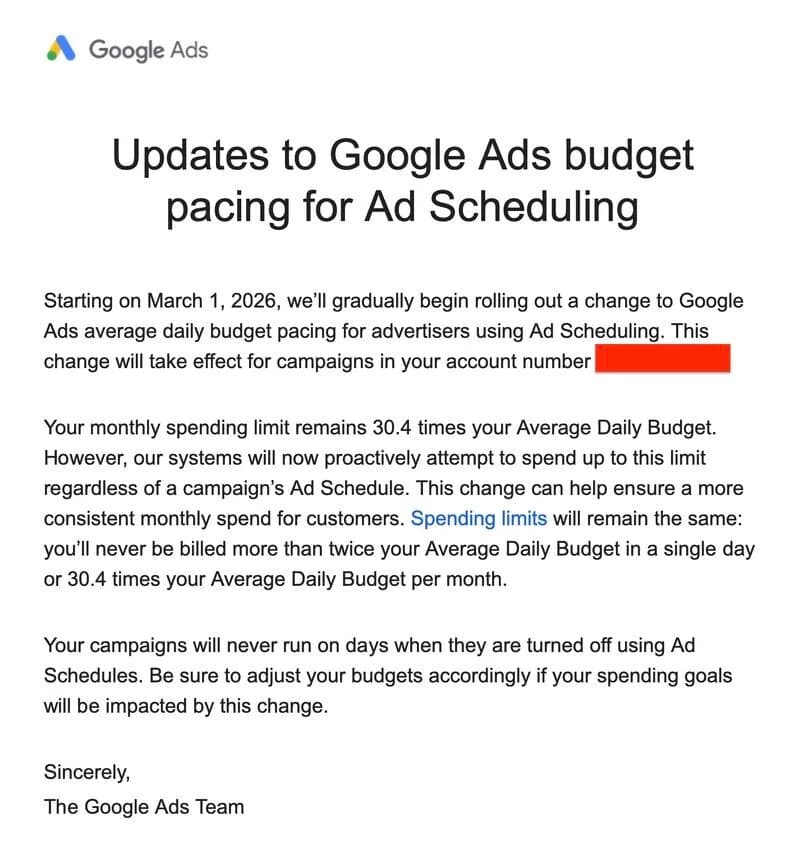
Google has begun notifying advertisers of a significant change to how ad scheduling interacts with budget pacing. Starting in March, the system will attempt to spend the full monthly budget regardless of when campaigns are scheduled to run.
BigQuery Studio now allows users to set a persistent "maximum bytes processed" limit that follows their user profile across projects. The setting acts as a personal safety net, preventing massive data scans triggered by typos or exploratory queries from generating unexpected costs.
Microsoft Advertising has released a new scenario-based learning path for Performance Max in its Learning Lab, covering setup, optimisation, and troubleshooting across three courses. Advertisers who complete the programme can earn a verifiable badge via Credly to showcase on LinkedIn.
Google Merchant Centre has updated its terminology, renaming "Destinations" to "Marketing methods." The change aims to better reflect the options merchants have to control product visibility and distribution across Google's surfaces.
The Adthena team has identified the first confirmed ads appearing in ChatGPT for signed-in desktop users in the US. The sighting, which Glenn Gabe compared to "seeing Bigfoot in the wild," confirms that OpenAI's advertising pilot has moved from announcement to execution.
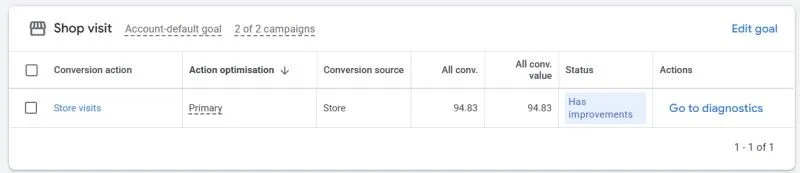
Nonprofits using Google Ad Grants can now set shop visits as an account-level goal - a capability that previously returned an error in Ad Grant accounts. For organisations with physical locations, such as museums, community centres, or service locations, this enables optimising campaigns based on actual footfall rather than proxy metrics.
BigQuery has launched Global Queries in preview, allowing analysts to join datasets across different regions in a single SQL statement without manually moving data. Alicia Williams tested the feature by joining bike-sharing data from Austin (stored in the US region) and London (stored in the EU region) to compare rental patterns by hour.
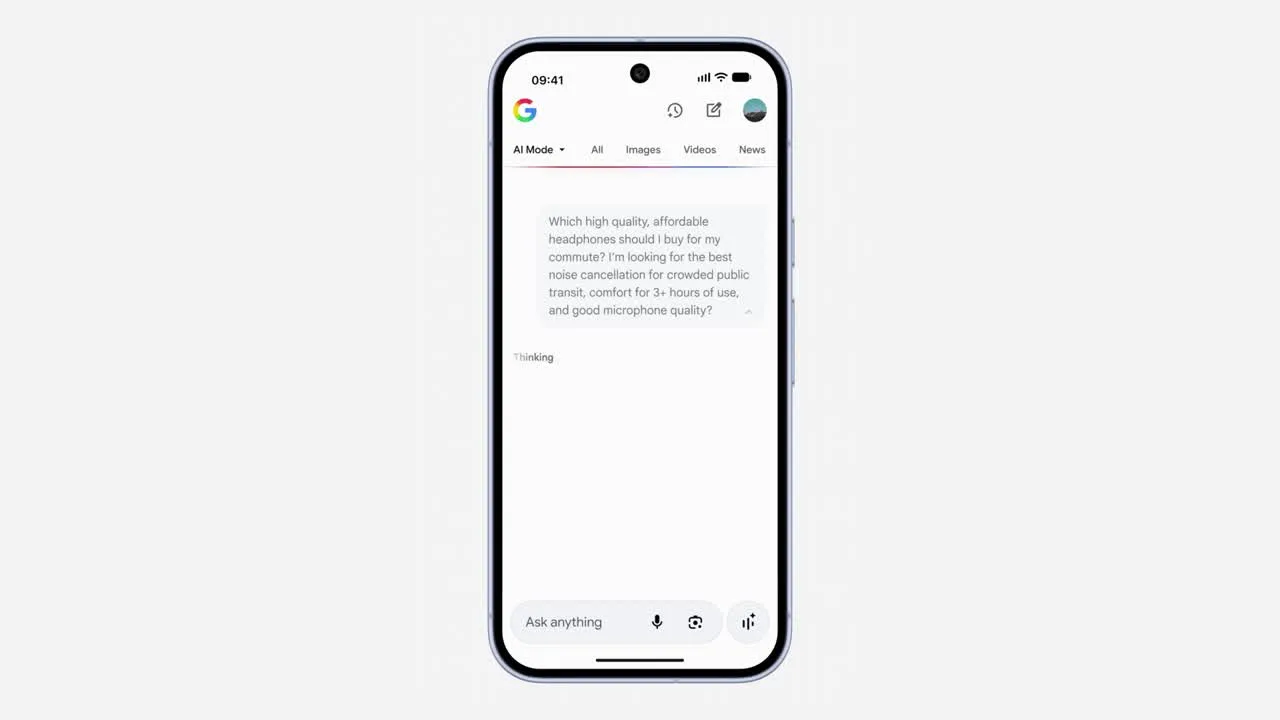
Reddit is testing a new AI-powered search feature that surfaces community-recommended products with pricing, images, and direct purchase links. When US-based users search for product-related queries like "best noise-cancelling headphones," they'll see interactive product carousels at the bottom of search results.
Microsoft Advertising is expanding its sales outreach through Teleperformance, with representatives now contacting advertisers to offer "free consultations." The approach mirrors Google's aggressive sales tactics that many in the industry have found intrusive.
Microsoft Advertising is experimenting with a new design in its shopping ads carousel on Bing Search, underlining product titles. The change appears to be a visual test to improve click-through on product listings.
Google AdSense is introducing additional triggers for vignette ads, including showing ads when users reach the end of an article, are inactive for 30+ seconds, or navigate backwards using the browser's back button. The new triggers will auto-enable on March 9, 2026, unless publishers opt out during the one-month review period.
In her third annual letter, Google VP Vidhya Srinivasan outlined the 2026 roadmap for Ads & Commerce. Google is testing a new shopping ad format in AI Mode that surfaces sponsored retailers alongside organic recommendations.
Microsoft Advertising offers map pack placements through location extensions. You can secure map pack placements just by setting up a location extension.
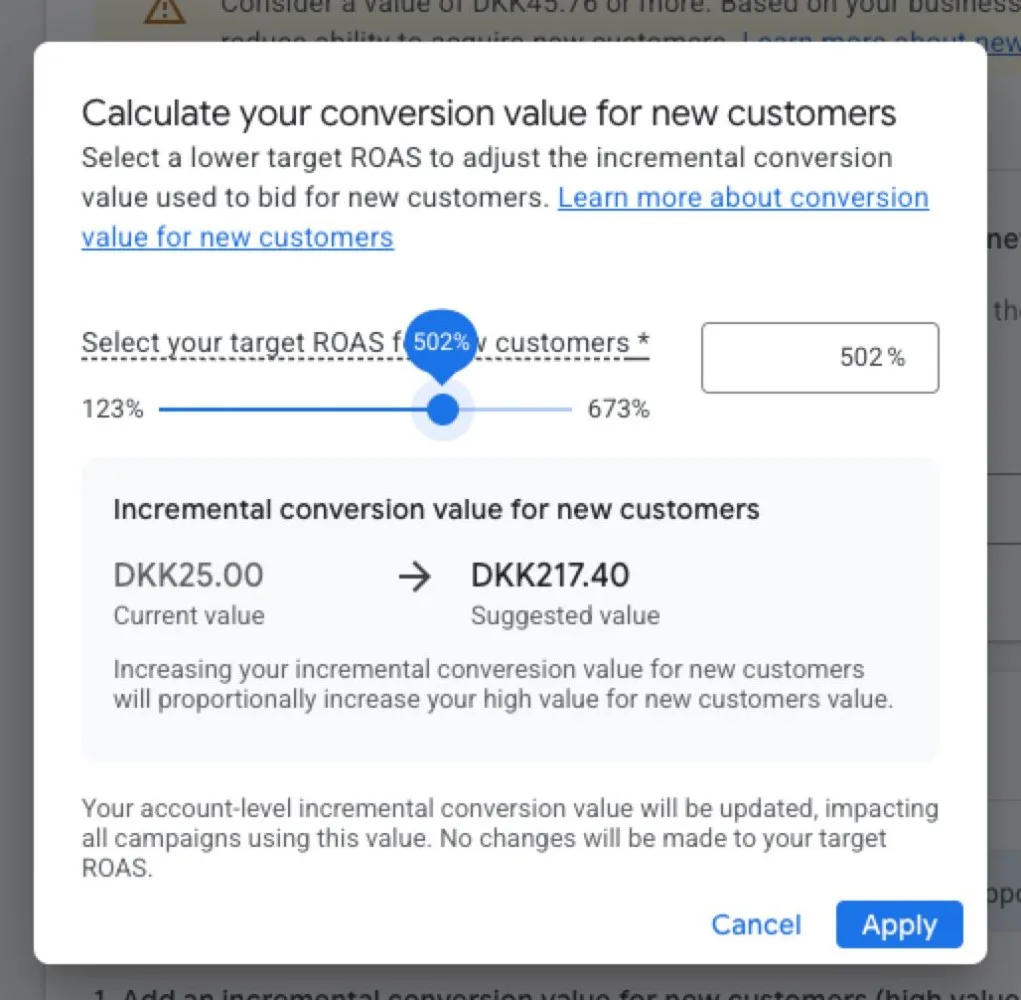
Google Ads now lets you set the conversion value for new customers by specifying the target ROAS. The system will then automatically propose a value based on your settings.
In the latest episode of the Ads Decoded podcast, Ginny Marvin sits down with Brandon Ervin, Director of Product Management for Search Ads, to discuss campaign consolidation. Ervin clarifies that consolidation is not the end goal: equal or better performance with less granularity is.
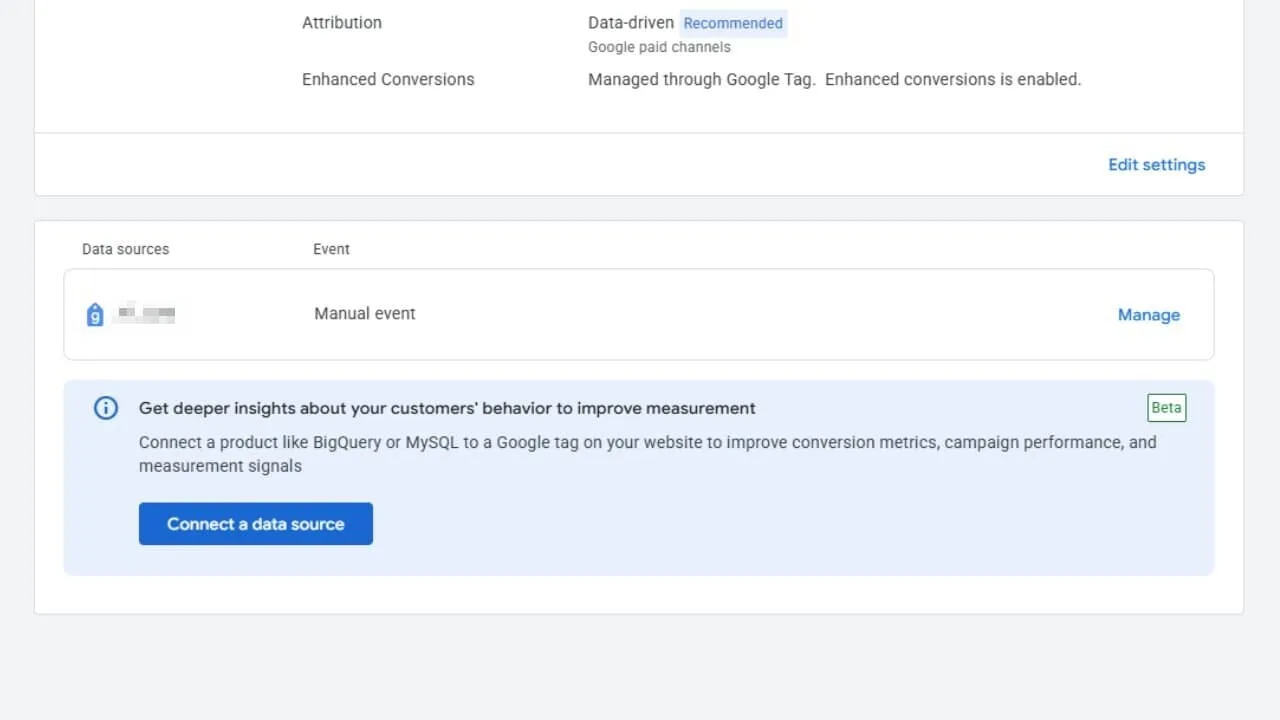
Google Ads is testing a new beta feature allowing advertisers to connect external data sources like BigQuery or MySQL directly to their Google tag within conversion action details. The feature aims to enhance conversion metrics and measurement signals.
Starting in March 2026, Lookalike audiences in Demand Gen campaigns will see changes to how they function. Advertisers should review their audience configurations before the update takes effect.
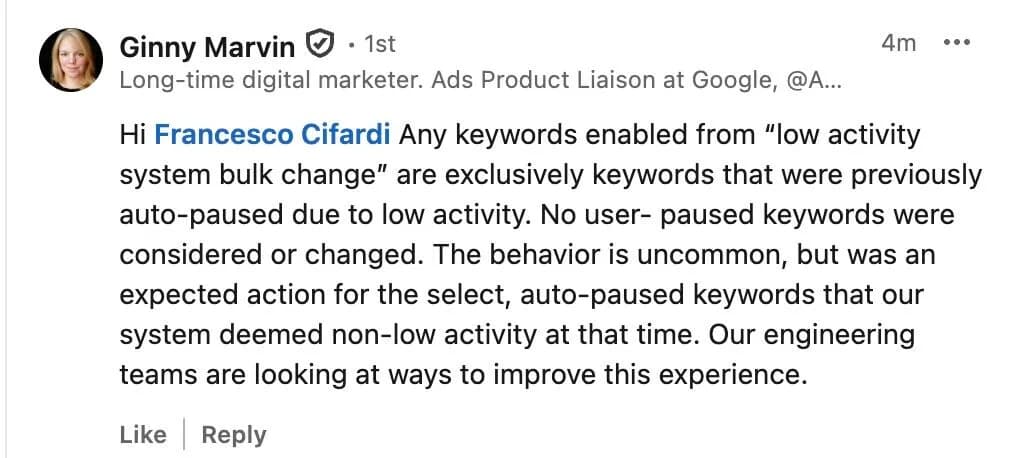
Google Ads' internal "Low activity system bulk changes" tool can now enable keywords, not just pause them. Francesco Cifardi reported seeing paused keywords being automatically reactivated in Change History: the first time he'd observed this behaviour.
UCP-powered checkout is now appearing in Google's AI Mode shopping results. A prominent "Buy" button appears for Wayfair's free listing results, allowing users to complete purchases directly within the conversational interface.
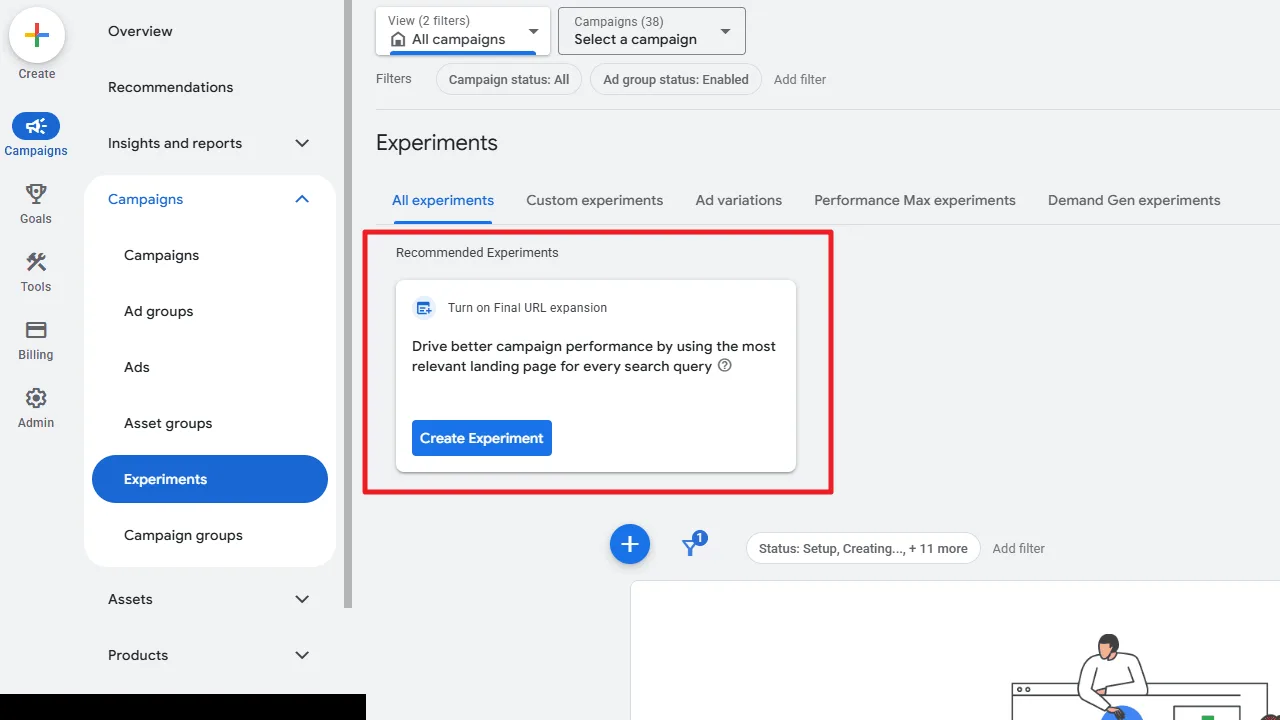
Google Ads now displays recommended experiments directly on the Experiments page, tailored to your account setup and performance data. Each recommendation includes a preconfigured setup you can apply immediately or customise.
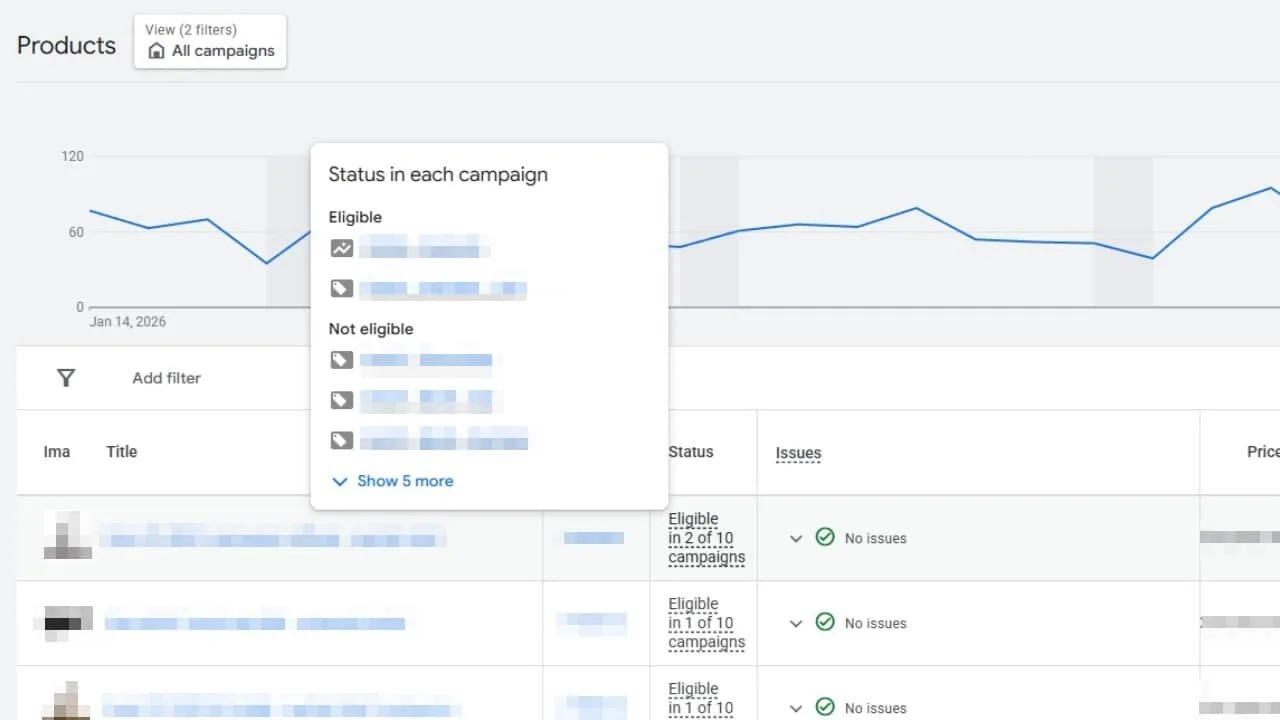
Google Ads now displays campaign eligibility directly in the Status column of the Products section. This update complements the Product-Level Campaign View introduced in January.
Each update has one permanent page. New evidence about the same development is added to that page. Dates identify the source report or newsletter coverage; article publication dates appear in the full view.
2026 newsletter archive: 38 editions and 1,562 distinct updates through Week 36. Source descriptions, credits and media are preserved; missing details remain marked.
Spotted an update worth sharing?
Share the original source and what changed. If it is already covered, help us improve the existing update.